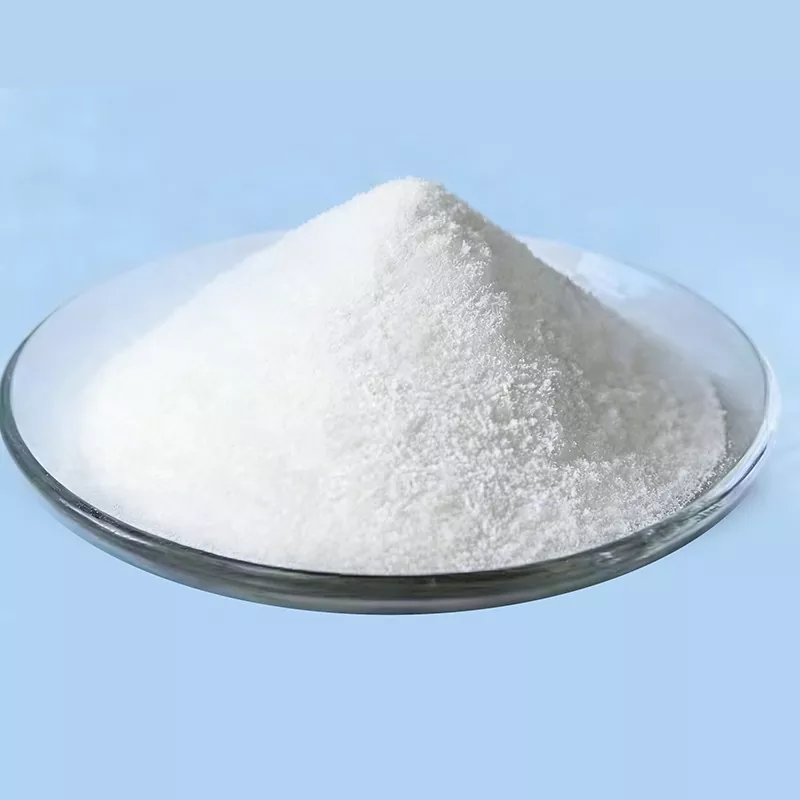
Similarly belonging to strong bases, Potassium tert-Butoxide, compared to common strong bases such as sodium ethoxide and sodium hydroxide, preferentially triggers elimination reactions and is difficult to undergo substitution reactions. The core reason is its extremely high steric hindrance, as well as its special properties of strong alkalinity and weak nucleophilicity. These two factors together completely change the reaction selectivity.
1、 Core key: ultra large spatial hindrance blocking substitution reaction
The reaction modes of substitution reaction and elimination reaction are completely different, and the requirements for space environment vary greatly, which is the fundamental basis of selective differentiation.
The occurrence of bimolecular substitution reaction requires reagents to approach and attack the core carbon skeleton from the back of the substrate carbon atom, in order to squeeze out the original leaving group. This process requires high spatial conditions, and the reaction site is located inside the molecule. If there are any excess functional groups blocking it, the reagent cannot approach and complete the attack.
The alkaline active group of potassium tert butoxide has three methyl side chains, and the overall molecular volume is very large, belonging to a typical large steric hindrance structure. This massive structure produces a strong spatial occlusion effect, making it impossible to squeeze into the internal space of substrate molecules and complete the backside attack step required for substitution reactions, directly blocking the pathway of substitution reactions.
On the other hand, elimination reactions only require reagents to grab the exposed hydrogen atoms on the outer side of the substrate molecule to occur. This type of outer hydrogen atom is exposed on the surface of the molecule, with no space to block it. Even if the reagent has a large volume, it can easily come into contact with and capture hydrogen atoms, triggering the elimination reaction smoothly.
2、 Property differentiation: Strong alkalinity but extremely weak nucleophilicity
Conventional small steric hindrance strong bases often have both strong alkalinity and nucleophilicity, so substitution and elimination reactions compete with each other. But potassium tert butoxide disrupted this balance, resulting in a separation of alkalinity and nucleophilicity.
From the perspective of acidity and alkalinity, potassium tert butoxide has a stronger alkalinity than common strong bases such as sodium ethoxide, which is efficient enough to drive the elimination reaction. But due to its extremely large molecular steric hindrance, its nucleophilic ability is greatly weakened.
There is a clear pattern in organic reactions: the larger the molecular steric hindrance in the same type of alkaline reagent, the weaker the nucleophilic attack ability, and the more prominent the alkaline advantage of extracting hydrogen atoms. Potassium tert butoxide is a typical high steric hindrance, low nucleophilicity, and high alkalinity reagent. It is good at capturing hydrogen atoms to initiate elimination, but not good at attacking carbon atoms to initiate substitution.
3、 The strengthening effect brought by substrate structure
For primary and secondary halogenated substrates with branched chains, the spatial conditions for substitution reactions are poor, and elimination reactions already have certain advantages. After pairing with potassium tert butoxide, the substitution pathway is completely blocked, and the reaction will almost only generate elimination products.
Even for structurally simple linear primary substrates, ordinary small steric hindrance strong bases can smoothly undergo substitution reactions, but potassium tert butoxide will still preferentially undergo elimination, producing only a very small amount of substitution by-products, and the selectivity difference is extremely significant.
4、 Summary and Synthetic Applications
Simply put, the large molecular hindrance of potassium tert butoxide blocks the internal carbon attack pathway required for substitution reactions, but does not affect the capture of external hydrogen; At the same time, high alkalinity further promotes the elimination reaction, ultimately forming a reaction characteristic of specific priority elimination.
Based on this characteristic, if one wants to prepare olefins by removing small molecules in organic synthesis, potassium tert butoxide is preferred; When a substitution reaction is needed for functional group conversion, small steric hindrance bases such as sodium ethoxide and sodium methoxide are used.
We use cookies to offer you a better browsing experience, analyze site traffic and personalize content. By using this site, you agree to our use of cookies.Privacy Policy